
Hot Flushes Got You Down?
Updated: Jul 4
Your Complete Guide to Managing Peri-menopause Hot Flushes Day and Night
If you're reading this, chances are you've experienced that unmistakable feeling. You know the one. That sudden wave of heat that starts somewhere deep inside and spreads across your chest, up your neck, and floods your face. Your heart might start racing, you break into a sweat (sometimes a full-blown drench), and you're frantically peeling off layers or reaching for anything cold. Welcome to the wonderful world of perimenopause hot flushes.
Here's the thing though: you're absolutely not alone in this. Research shows that up to 80% of women experience hot flushes during perimenopause (1). That's 8 out of every 10 women! And while they can last anywhere from a few seconds to several minutes, the impact they have on your day-to-day life can be huge.
The good news? There are so many practical, evidence-based strategies you can use right now to help manage these symptoms and reclaim some comfort. Let's dive into what's actually happening in your body, and more importantly, what you can do about it.
What's Actually Happening in Your Body?
First things first, let's talk about why this is happening. During perimenopause, your oestrogen levels start doing this wild rollercoaster thing. They're up, they're down, they're all over the place. This hormonal fluctuation affects your brain's temperature control centre (the hypothalamus, if you want to get technical about it) (2).
Think of it like this: your body's thermostat has suddenly become super sensitive. The 'comfortable temperature zone' that used to be nice and wide has shrunk down to almost nothing (3). So, your body thinks you're overheating when you're actually fine, and it kicks into cooling mode. Your blood vessels dilate (that's the flushing you see), your sweat glands go into overdrive, and your heart rate might spike a bit.
Here's what makes it even trickier: after all that heat and sweating, your body temperature can actually drop too much, which is why you might get the chills afterwards. It's your body overcorrecting, trying to warm you back up (4). No wonder you feel exhausted!
In the Moment Strategies: When You Feel One Coming On
Right, so you feel that telltale warmth starting to build. What can you actually do right now? Here are some tried and tested strategies that really work.
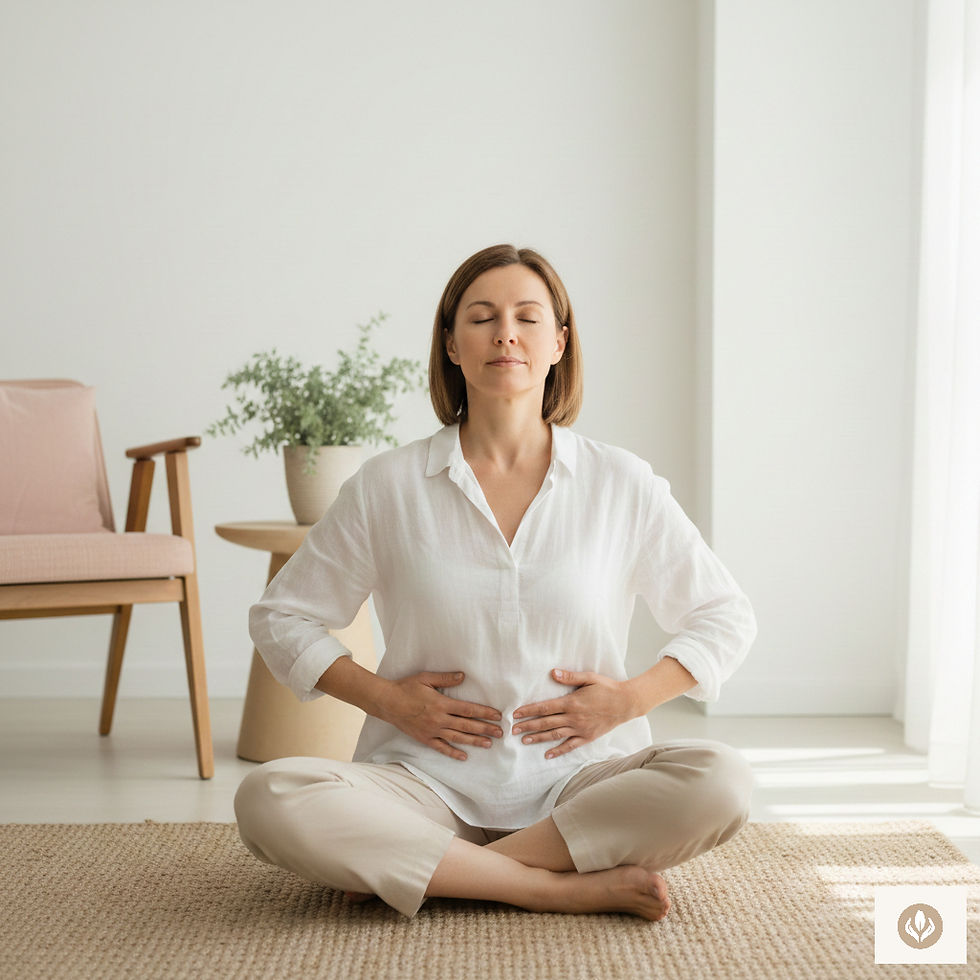
Deep Belly Breathing (This One's Gold)
I know, I know, everyone bangs on about breathing exercises. But hear me out because the research on this is actually really impressive. Studies have shown that slow, deep breathing (what researchers call 'paced respiration') can reduce both the frequency and severity of hot flushes (5).
Here's how to do it: when you feel a flush starting, breathe in slowly through your nose for a count of 4, then breathe out through your mouth for a count of 6. The key is to breathe out for longer than you breathe in. This activates your parasympathetic nervous system (your body's relaxation response) and helps calm things down (6).
The magic number seems to be getting down to about 6 to 8 breaths per minute. It sounds simple, but research shows that women who practiced this technique twice daily for 15 minutes experienced up to a 44% reduction in hot flush symptoms (7). Not too shabby, right?
Pro tip: Practice this when you're NOT having a flush, so it becomes second nature when you need it most. Pop a reminder on your phone for morning and evening and just spend 10 to 15 minutes breathing slowly and deeply.
Get Cool, Fast
Sometimes you just need to cool down, stat. Here's your emergency toolkit:
Cold water: Keep a bottle of cold water with you everywhere. When a flush hits, take small sips. The cold water helps cool you from the inside, and the act of sipping gives you something to focus on (8).
Cold compress: A cool, damp cloth or an ice pack on your wrists, neck, or forehead can provide instant relief. Your wrists and neck have blood vessels close to the skin's surface, so cooling these spots helps bring your whole-body temperature down quickly.
Face misting spray: Keep a small spray bottle of water in your bag (you can add a drop of peppermint oil if you fancy). A quick spritz on your face and neck can feel amazing when you're burning up.
Portable fan: Look, I know it's not the most glamorous accessory, but a small handheld or USB fan can be a lifesaver, especially at work or when you're out and about. There are some lovely, discreet options available these days.
Smart Clothing Choices
This is huge: dress in layers. Always. I mean it. Even if the weather's warm, you want to be able to peel off a layer when you need to (9).
Think lightweight, breathable fabrics like cotton, linen, or moisture wicking athletic materials. Avoid synthetic fabrics that trap heat (like polyester). And here's a styling tip: a cardigan or light jacket over a camisole or tank top gives you options without looking like you're dressed for a hike.
Scarves can be brilliant too because you can whip them off in seconds. Just make sure they're breathable fabrics, not heavy wool.
Night Sweats: Getting Your Sleep Back
Okay, so day flushes are annoying, but night sweats? They're on another level. Waking up drenched in sweat, having to change your pyjamas (sometimes multiple times a night), feeling exhausted the next day... it's rough. Night sweats are essentially hot flushes that happen during sleep, and they can seriously mess with your quality of life (10).
Let's talk about how to reclaim your nights.
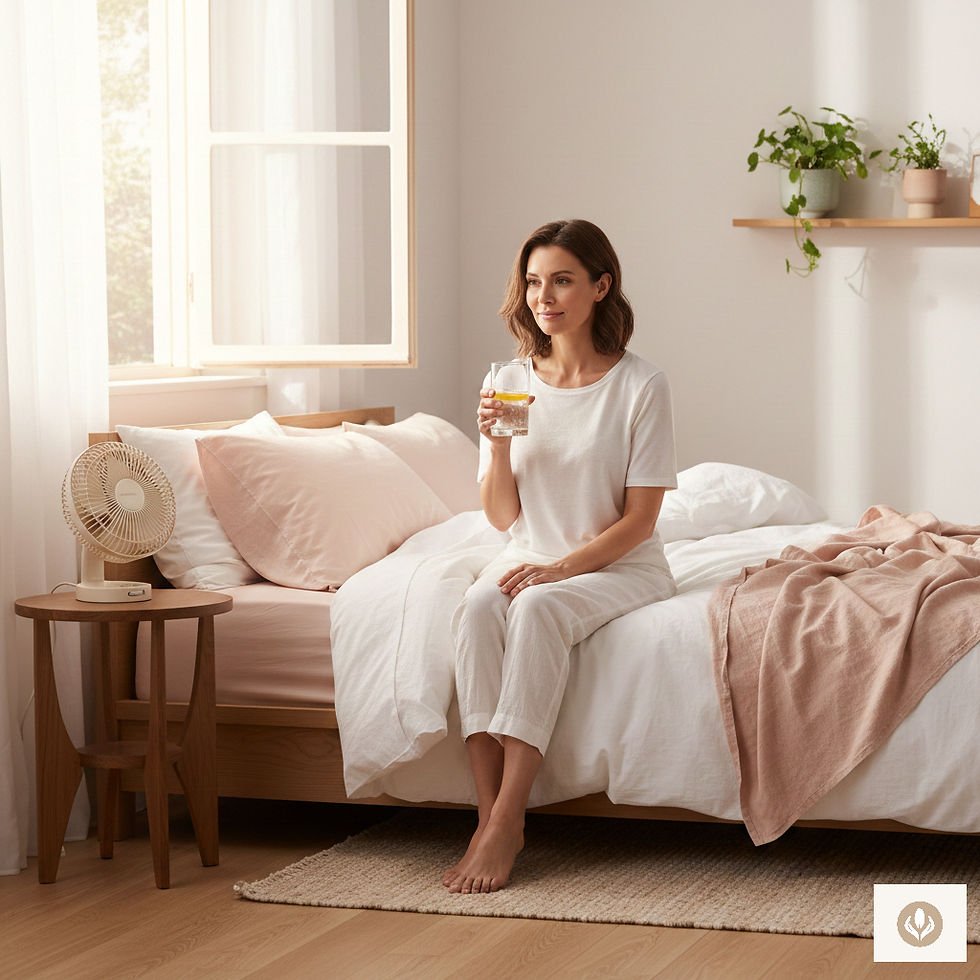
Create a Cool Sleep Cave
Your bedroom needs to be cooler than you think. Research suggests the ideal temperature for sleep is between 15 to 19 degrees Celsius (11). I know that might sound cold, but trust me on this one.
Open windows: Get that fresh air flowing. Even in winter, a slightly open window can make all the difference.
Fans: A ceiling fan or standing fan can be your best friend. Even just the air circulation helps.
Air conditioning: If you have it, use it. Set it to come on before bed so your room's already cool.
Bedside essentials: Keep a glass of cold water by your bed, have an extra change of pyjamas ready, and maybe even a small towel. Being prepared takes some of the stress out of waking up sweaty.
Bedding That Works With You, Not Against You
This is where investing a bit can really pay off.
Cotton or bamboo sheets: These natural fibres breathe beautifully and wick away moisture. Cotton thread counts around 300 to 400 strikes a nice balance between softness and breathability.
Layered bedding: Instead of one heavy duvet, try layering lighter blankets. You can kick them off as needed without waking up freezing later.
Cooling pillow: There are some excellent cooling pillows on the market now that use gel or other materials to stay cool. Game changer for many women.
Moisture wicking mattress protector: Protects your mattress and helps keep you dry. Worth every penny.
Pyjama Power
Cotton, cotton, cotton. Or bamboo. Or moisture wicking athletic fabrics. The key is breathability. Loose fitting styles tend to be more comfortable than tight ones. And honestly? Having a couple of spare pairs by your bed isn't overkill. It's practical.
Lifestyle Tweaks That Make a Real Difference
Right, let's talk about the bigger picture stuff. These are the habits and choices that can help reduce how often you get hot flushes in the first place.
Know Your Triggers
Hot flushes don't just happen randomly. They often have triggers. Common ones include (12):
Caffeine: That afternoon coffee might be setting you up for an evening flush fest.
Alcohol: Wine with dinner? It might be triggering more than just a nice glow.
Spicy foods: Your beloved curry could be adding fuel to the fire (literally).
Hot drinks: That steaming cup of tea might push you over the edge.
Stress: Big one. When you're stressed, your body's already in a heightened state, making flushes more likely.
Smoking: If you needed another reason to quit, hot flushes are more common in smokers.
Try keeping a little diary for a week or two. Note when you get flushes and what you were doing, eating, or drinking beforehand. You might spot patterns you hadn't noticed.
Movement: Your Body's Natural Medicine
I know the last thing you might feel like doing when you're having hot flushes is exercise, but hear me out. Regular physical activity has been shown to help reduce the frequency and severity of hot flushes (13). Plus, it's brilliant for managing stress, supporting your mood, and keeping your bones strong.
You don't need to become a gym bunny. We're talking about finding movement you enjoy. A daily walk, some gentle yoga, swimming, dancing in your kitchen. Anything that gets you moving regularly.
Bonus: Regular exercise also helps with sleep, which we know gets disrupted by night sweats. It's all connected, you see?
Eating to Support Your Body
No single food is going to cure hot flushes (if only!), but eating well can support your overall wellbeing during this transition. Here's what tends to help:
Balanced meals: Focus on whole foods. Plenty of vegetables, quality protein, healthy fats, and complex carbohydrates. This helps keep your blood sugar stable, which can reduce stress on your body.
Stay hydrated: Dehydration can make hot flushes worse. Aim for at least 2 litres of water a day, more if you're exercising or it's hot.
Omega 3 fatty acids: Found in oily fish, walnuts, flaxseeds. They're anti-inflammatory and support overall health.
Phytoestrogens: These plant compounds found in soy, flaxseeds, and legumes have a mild oestrogenic effect. The research is mixed on whether they help with hot flushes, but they're part of a healthy diet anyway (14).
What to potentially reduce: As mentioned, caffeine, alcohol, and spicy foods can trigger flushes for many women. You don't necessarily need to cut them out completely but notice how you feel after consuming them.
Your Mindset Matters More Than You Think
Here's something fascinating: research shows that how you think about and react to hot flushes can affect how bothersome they are (15). This isn't about positive thinking making them go away. it's about changing your relationship with them.
Cognitive Behavioural Therapy (CBT) has been shown in multiple studies to be effective for managing menopausal symptoms (16). It works by helping you identify unhelpful thought patterns (like 'Everyone's staring at me' or 'This is unbearable') and replace them with more balanced thoughts (like 'This is temporary' or 'My body is adjusting').
The brilliant thing about CBT is that it doesn't just help with the hot flushes themselves. Studies have shown it also improves sleep, mood, and overall quality of life (17). And it can be delivered in different formats: group sessions, one to one therapy, or even self-help books.
Simple mindset shifts to try:
Normalise it: Remind yourself that this is a normal part of the menopausal transition. 8 out of 10 women go through this.
Don't catastrophise: When you feel one starting, avoid thoughts like 'This is going to be terrible.' Try 'Okay, here we go. I've got this. It'll pass.'
Have a plan: Knowing you have strategies (breathing, cool water, etc.) can reduce anxiety about having flushes, which in turn can reduce their frequency.
Talk about it: Honestly, the more we talk about hot flushes, the less stigma there is. Chat to your friends, your family, your colleagues. You might be surprised how many women around you are going through the same thing.
Sleep Hygiene (Beyond the Bedroom Setup)
Good sleep habits can help reduce night sweats and improve your overall resilience.
Consistent schedule: Try to go to bed and wake up at roughly the same time each day, even on weekends.
Wind down routine: Give yourself at least 30 minutes to relax before bed. Read, take a bath (cool or lukewarm, not hot!), do your breathing exercises.
Limit screens: The blue light from phones and tablets can interfere with your sleep hormones. Try to switch off at least an hour before bed.
Watch evening intake: Avoid large meals, caffeine, and alcohol close to bedtime. They can all trigger night sweats or disrupt sleep.
Make your bedroom a sanctuary: Use it for sleep and intimacy only. Not for working, scrolling through social media, or watching TV. Your brain needs to associate your bedroom with rest.
Other Options Worth Exploring
Clinical Hypnotherapy
Now, I know what you might be thinking, but stay with me! Clinical hypnotherapy (which is different from stage hypnosis) has some really impressive research behind it for hot flushes (18).
Studies have shown that clinical hypnosis can reduce hot flush frequency by more than 60%, and it also helps with sleep quality and mood (19). It works by helping you achieve a deep state of relaxation and focus, and it may actually affect the brain's temperature regulation centre.
There are even apps and audio programs now that guide you through self-hypnosis sessions at home. Worth a look if you're open to it!
Meditation and Mindfulness
While the research on meditation specifically for hot flushes is still developing, what we do know is that mindfulness practices can help you feel less bothered by hot flushes when they happen (20). It's about changing your relationship with the sensation rather than fighting it.
Plus, meditation is brilliant for stress management, and we know stress is a major trigger. Even just 10 minutes a day of quiet sitting and focusing on your breath can make a difference.
When to Talk to Your Healthcare Provider
Look, all these strategies are brilliant, and many women find they can manage their symptoms really well with lifestyle changes alone. But here's the thing: if your hot flushes are severely affecting your quality of life, your sleep, your work, or your relationships, it's absolutely worth talking to your doctor.
There are medical treatments available that can really help, including:
Hormone therapy: Still the most effective treatment for moderate to severe hot flushes. For many women, especially those in early menopause, the benefits can far outweigh the potential risks (21).
Non hormonal medications: There are now several non-hormonal medications approved specifically for treating hot flushes, speak to your GP to discuss the options (22).
Don't suffer in silence. You deserve to feel comfortable in your own body. A good healthcare provider will work with you to find the approach that's right for you, considering your symptoms, medical history, and personal preferences.

Pulling It All Together
I know this is a lot of information, so let's bring it back to the practical stuff you can start doing today.
Your 'Start Today' Action Plan:
1. Set up your immediate response kit: cold water bottle, face spray, portable fan. Keep these with you.
2. Start practicing paced breathing twice a day for 10 to 15 minutes. Set reminders on your phone.
3. Make your bedroom cooler tonight. Open a window, add a fan, and swap to lighter bedding.
4. Keep a simple flush diary for a week to identify your personal triggers.
5. Check your wardrobe. Do you have enough layering, breathable clothing? If not, time for a little shopping trip!
Remember, managing hot flushes isn't about finding one magic solution. It's about building a toolkit of strategies that work for you. What helps your best friend might not work for you, and that's totally okay. This is about tuning into your own body and figuring out what brings you relief.
A Final Word
Look, perimenopause and the hot flushes that come with it? They're not fun. But you're not going to feel like this forever. For most women, hot flushes improve over time. The average duration is around 7 to 10 years (though it varies hugely), with symptoms often being most intense in the two years around your final period (23).
In the meantime, be kind to yourself. Your body is going through a massive transition. Some days will be better than others, and that's completely normal. Use these strategies, experiment with what works for you, and don't be afraid to reach out for support when you need it.
You're not just surviving this; you're learning to thrive through it. And that takes strength, patience, and a whole lot of self-compassion.
You've got this, really, you do.
With warmth (but not too much!),
Kerry
If you would like some support please reach out and book a free 30-minute discovery call
References
1. The Menopause Society. Hot Flashes. Available at: https://menopause.org/patient-education/menopause-topics/hot-flashes
2. Deecher D, Dorries K. Understanding the pathophysiology of vasomotor symptoms (hot flushes and night sweats) that occur in perimenopause, menopause, and postmenopause life stages. Arch Womens Ment Health. 2007;10(6):247-57.
3. Freedman RR. Hot flashes: behavioral treatments, mechanisms, and relation to sleep. Am J Med. 2005;118(12):124-30.
4. Pal L, Taylor HS. Hot Flashes: How to Get Relief Before, During, and After Menopause. Yale Medicine. 2024. Available at: https://www.yalemedicine.org/news/hot-flashes
5. Huang AJ, Grady D, Mendes WB, et al. Device-guided slow-paced respiration for menopausal hot flushes: a randomized controlled trial. Obstet Gynecol. 2015;125(5):1130-8.
6. Carpenter JS, Burns DS, Wu J, et al. Paced respiration for vasomotor and other menopausal symptoms: a randomized, controlled trial. J Gen Intern Med. 2013;28(2):193-200.
7. Sood R, Sood A, Wolf SL, et al. Paced breathing compared with usual breathing for hot flashes. Menopause. 2013;20(2):179-84.
8. National Institute on Aging. Hot Flashes: What Can I Do? Available at: https://www.nia.nih.gov/health/menopause/hot-flashes-what-can-i-do
9. American College of Obstetricians and Gynecologists. An Ob-Gyn's Top Tips for Managing Hot Flashes. Available at: https://www.acog.org/womens-health/experts-and-stories/the-latest/an-ob-gyns-top-tips-for-managing-hot-flashes
10. Minarik PA. Sleep disturbance in midlife women. J Obstet Gynecol Neonatal Nurs. 2009;38(3):333-43.
11. Harding EC, Franks NP, Wisden W. The temperature dependence of sleep. Front Neurosci. 2019;13:336.
12. Cleveland Clinic. Hot Flashes: Triggers, How Long They Last & Treatments. 2024. Available at: https://my.clevelandclinic.org/health/symptoms/15223-hot-flashes
13. Daley A, Stokes-Lampard H, Thomas A, MacArthur C. Exercise for vasomotor menopausal symptoms. Cochrane Database Syst Rev. 2014;(11):CD006108.
14. Franco OH, Chowdhury R, Troup J, et al. Use of plant-based therapies and menopausal symptoms: a systematic review and meta-analysis. JAMA. 2016;315(23):2554-63.
15. Norton S, Chilcot J, Hunter MS. Cognitive-behavior therapy for menopausal symptoms (hot flushes and night sweats): moderators and mediators of treatment effects. Menopause. 2014;21(6):574-8.
16. Hunter MS, Smith M. Cognitive Behaviour Therapy (CBT) for Menopausal Symptoms. British Menopause Society. 2022.
17. Green SM, Donegan E, Frey BN, et al. Cognitive behavior therapy for menopausal symptoms (CBT-Meno): a randomized controlled trial. Menopause. 2019;26(9):972-80.
18. Muniz V, et al. Clinical hypnosis and cognitive behavioral therapy for hot flashes: a scoping review. Presented at The Menopause Society Annual Meeting 2024.
19. Elkins GR, Fisher WI, Johnson AK, et al. Clinical hypnosis in the treatment of postmenopausal hot flashes: a randomized controlled trial. Menopause. 2013;20(3):291-8.
20. Carmody JF, Crawford S, Salmoirago-Blotcher E, et al. Mindfulness training for coping with hot flashes: results of a randomized trial. Menopause. 2011;18(6):611-20.
21. Pinkerton JV, Sánchez Aguirre F, Blake J, et al. The 2023 nonhormone therapy position statement of The North American Menopause Society. Menopause. 2023;30(6):573-90.
22. Mayo Clinic. Hot Flashes - Diagnosis & Treatment. 2025. Available at: https://www.mayoclinic.org/diseases-conditions/hot-flashes/diagnosis-treatment/drc-20352795
23. Johns Hopkins Medicine. Managing Hot Flashes: Tips from a Menopause Expert. 2025. Available at: https://www.hopkinsmedicine.org/health/wellness-and-prevention/managing-hot-flashes-tips-from-a-menopause-expert


Comments