
Bone health for menopause: a whole-food plan
The everyday foods that support bone density, no supplements aisle required.

Here is something I hear a lot from women going through menopause: they worry about their bones, but they are not quite sure what to actually do about it. They have heard they should take calcium. Maybe a bit of vitamin D. But beyond that, the whole topic feels complicated and a bit out of reach.
I want to simplify this for you. Because protecting your bone density is genuinely something you can influence every single day, through the food on your plate. And no, it does not require a trolley full of supplements or a complicated eating protocol. It requires understanding which everyday foods are working hard for your skeleton, and making sure they show up consistently.
Why bones become vulnerable during menopause, particularly after 50
Bone is living tissue that is constantly being broken down and rebuilt. Until around our mid-thirties, the building outpaces the breakdown. After that, the balance shifts. And when oestrogen levels fall during menopause, that shift accelerates significantly. Oestrogen plays a critical role in regulating osteoclasts, the cells that break down bone (resorption). Without adequate oestrogen, bone resorption outpaces bone formation, which is why postmenopausal women account for the majority of osteoporosis diagnoses.[1]
The encouraging news is that nutrition has a well-established and direct role in protecting bone density at every stage of life, including and especially after 50.[2]
Bone health for menopause: The key nutrients your bones need

Calcium: the foundational mineral
Calcium is the primary mineral in bone tissue. After menopause, the recommended daily intake increases to around 1,200mg per day, because the body becomes less efficient at absorbing calcium from food. The good news is that New Zealand has some of the best dairy in the world, and full-fat dairy is one of the richest sources of highly bioavailable calcium.[1]
Great food sources available in New Zealand include:
• Cow's milk (about 300mg per 250ml glass)
• Yoghurt, particularly natural Greek-style yoghurt (around 350mg per 150g serving)
• Hard cheeses like cheddar and parmesan
• Canned salmon and sardines (with bones), which are brilliant budget-friendly options
• Tofu set with calcium sulphate (check the label)
• Dark leafy greens like kale, bok choy, and broccoli
• Almonds and tahini (sesame seed paste)
• Fortified plant milks if you are dairy-free
Vitamin D: the essential partner
Vitamin D is essential for calcium absorption. Without adequate vitamin D, even a calcium-rich diet cannot do its job properly. Our bodies make vitamin D through sun exposure, and in New Zealand we are fortunate to have good sunshine for much of the year. However, many women, especially those who work indoors or use high SPF sunscreen consistently, still have low vitamin D levels.[3]
Food sources of vitamin D include:
• Oily fish such as salmon, mackerel, and tinned sardines
• Eggs, particularly the yolk
• Fortified milk and some cereals
• Mushrooms exposed to sunlight (an interesting plant-based source)
A simple blood test from your GP can tell you where your vitamin D levels sit. It is worth checking, especially heading into winter.
Magnesium: the unsung hero
Magnesium is involved in over 300 biochemical reactions in the body, including bone formation. It works alongside calcium and vitamin D to maintain bone structure and function. Magnesium deficiency has been directly linked to lower bone mineral density. Yet many women are not getting enough of it because it is easily depleted by stress, alcohol, and a diet high in processed foods.[1]
Top food sources include:
• Pumpkin seeds and sunflower seeds
• Dark leafy greens, especially spinach
• Almonds, cashews, and Brazil nuts
• Avocado (a NZ staple, thankfully)
• Dark chocolate (70% cocoa or higher)
• Legumes: lentils, chickpeas, black beans
• Whole grains like brown rice and oats
Protein: more important than you might think
Protein is a key structural component of bone. It is also critical for maintaining the muscle mass that protects against falls. Current evidence suggests that women over 50 need around 1.1 to 1.5 grams of protein per kilogram of body weight per day, which is higher than the general recommendation. Prioritise high-quality protein sources at each meal: eggs, fish, chicken, legumes, dairy, and if you eat it, lean red meat.[2]
Vitamin K2: the traffic director
Vitamin K2 is less talked about but does something remarkable: it helps direct calcium into your bones rather than your arteries. Good food sources include fermented foods like natto (a Japanese fermented soybean product, available in Asian grocery stores in NZ), aged cheese, and egg yolks.
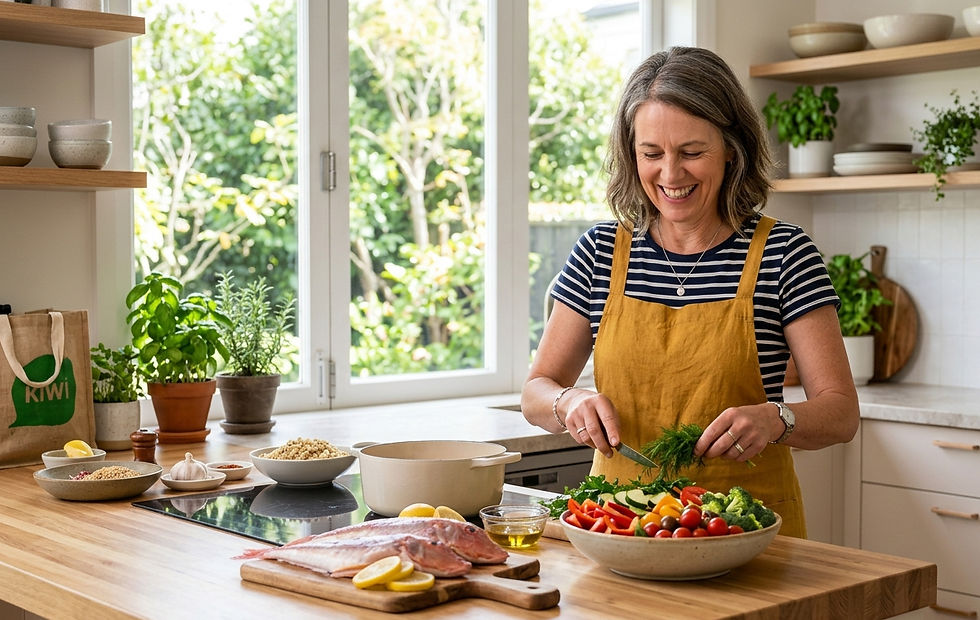
A day of bone-supporting eating (New Zealand style)
Breakfast: Greek yoghurt with kiwifruit, pumpkin seeds, and a drizzle of tahini. A glass of fortified milk or a latte.
Lunch: A salad with tinned salmon, kale, broccoli, avocado, chickpeas, and a lemon olive oil dressing.
Dinner: Baked salmon fillet with roasted broccoli and a side of brown rice with toasted almonds.
Snacks: A small handful of almonds, a square of dark chocolate, or carrot sticks with hummus.
This is not about perfection. It is about consistently showing up for your bones with the foods that genuinely support them. Over time, those consistent choices add up in ways that really matter.
If you would like some support please reach out and book a free 30-minute discovery call
REFERENCES
[1] PMC (2024). Nutrition-Based Support for Osteoporosis in Postmenopausal Women: A Review of Recent Evidence. https://pmc.ncbi.nlm.nih.gov/articles/PMC11034565/
[2] Frontiers in Nutrition (2025). Dietary interventions and nutritional strategies for menopausal health: a mini review. https://www.frontiersin.org/journals/nutrition/articles/10.3389/fnut.2025.1702105/full
[3] PMC (2020). Nutrient and Dietary Patterns in Relation to the Pathogenesis of Postmenopausal Osteoporosis. https://www.ncbi.nlm.nih.gov/pmc/articles/PMC7600848/
[4] Tufts Now (2025). What Vitamins Should I Take During Menopause for Bone Health? https://now.tufts.edu/2025/10/30/what-vitamins-should-i-take-during-menopause-bone-health


Comments